

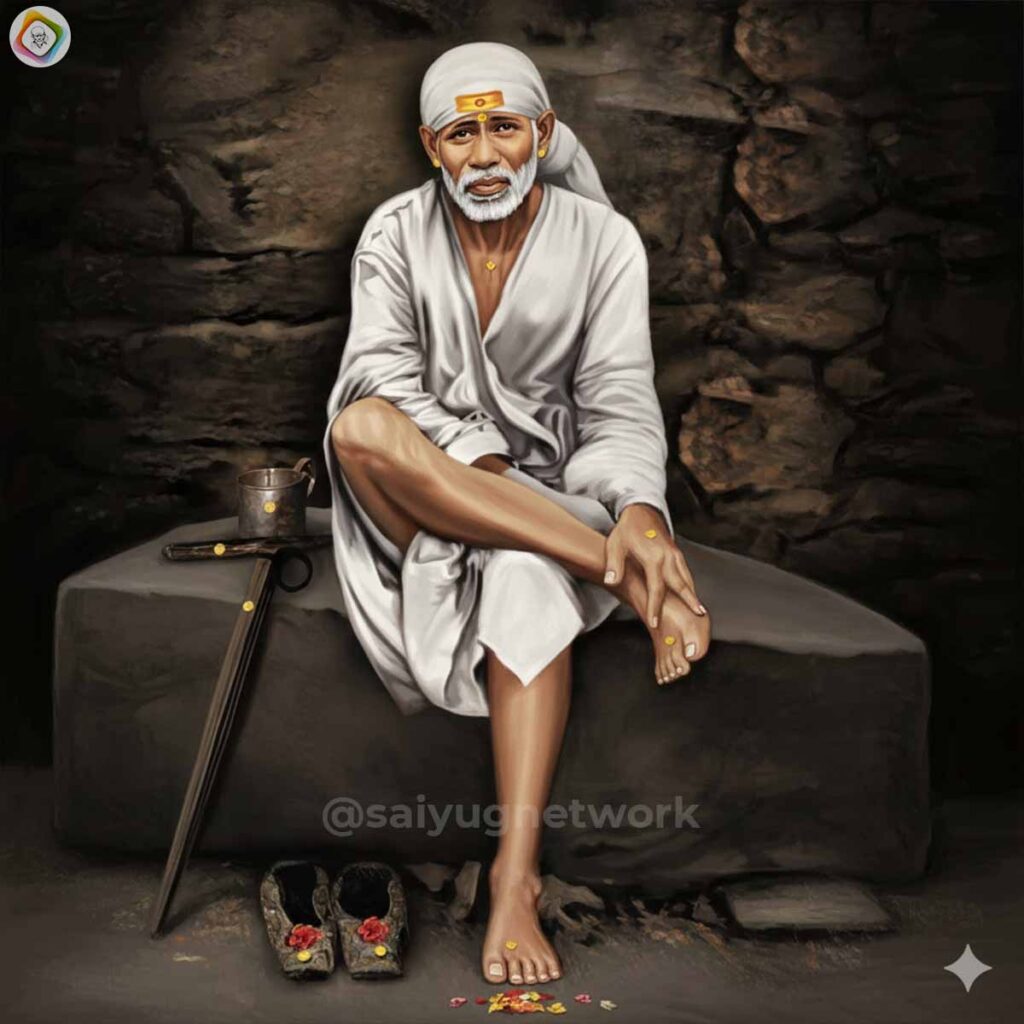
There’s something deeply meaningful about taking a mannat i.e. a vow. It comes from that tender space between desperation and devotion. We promise Baba something like a fast, a donation, a trip to Shirdi and in return, we plead for His grace. “Baba, agar yeh kaam ho gaya to main yeh karungi.” (“Baba, if this work gets done, then I will do this.”) How familiar those words sound! And yet, in Baba’s loving wisdom, He always wanted us to see beyond the surface of such promises.
He was of this opinion that, “Vow tab pavitra hota hai jab uske peeche shraddha aur prem ho, dar nahi.” (A vow becomes sacred only when it is born out of faith and love and not fear). But today, most vows come from anxiety rather than affection. People take vows not because they trust Baba, but because they are afraid He won’t act unless they offer something first. Baba would smile and gently say, “Is Fakir ko vyapari mat bana.” (Do not make this Fakir a businessman.)
And that’s the heart of it, we must never make our beloved Sai Baba a trader.
When a Vow Becomes a Bargain
It’s easy to slip into the mindset of exchange, “Baba, if You give me this, I will do that.” But if we look deeper, that’s no longer devotion; that’s a bargain. Baba never wanted His devotees to treat Him as a businessman sitting behind a divine counter, taking orders and payments.
He would lovingly feel in His heart that, “Beti, tu mujhe vyapari samajhti hai kya? Main teri bhavna dekhta hoon, kasam nahi.” (Child, do you see Me as a trader, I see your feelings and not the promise).
There’s a simplicity to those words that cuts through all our complicated offerings. Baba only wanted our hearts, not our deals.
I remember a devotee once shared a story that touched me deeply. Her husband was critically ill, and out of desperation, she vowed to walk barefoot to the Shirdi temple every Thursday until he recovered. For months, she walked, prayed, cried and then one day, exhausted and in tears, she said to Baba’s photo, “I have nothing more to offer.”
That night, she dreamt of Baba sitting on His stone, looking at her tenderly. He said,
“Why do you trouble yourself so much? Your faith itself is your vow.”
The next morning, she felt a strange calm. Her husband’s reports slowly improved. She realized what Baba had meant all along vows born out of fear exhaust the body; those born out of faith heal the soul.
The Essence of Faith Across Scriptures
Baba’s wisdom always bridged religions, reminding us that Truth wears many robes but carries one heart.
He often said, “Qur’an me likha hai, Allah ne tumse tumhare niyat poochi hai, na ki tumhari kasam.” Meaning, Allah asks of your intention, not your oath.
And in the Bhagavad Gita, Lord Krishna tells Arjun, “Jo poori shraddha se ek patra, ek pushpa, ek fal bhi arpit karta hai, main use svikaar karta hoon.” (Even a single leaf offered with pure faith is accepted by Him.)
Both teachings say the same thing, God values the bhaav (feeling), not the bahar (form). Whether it is a flower, a fruit, or a fast, it’s the emotion behind it that reaches the Divine.
When your heart is full of faith, your prayer automatically becomes a sankalp, a sacred resolve. A sankalp is not a deal; it is a declaration of love. It doesn’t bind you in expectation, it frees you in surrender.
When the Heart Speaks, Baba Listens
I recall another simple but beautiful story from an old devotee in Shirdi. A young man once took a vow before Baba’s photo, saying, “If I get a government job, I will offer You a silver plate.”
Weeks later, he got the job, but somehow kept delaying his visit to fulfill his vow. One night, he dreamt that he was standing before Baba in the Dwarkamai, feeling guilty. Baba chuckled and said, “Bhau, tujhya haatat ghetil aapan aplecha kaam. Don’t worry about the silver plate, I already took what I wanted.”
The young man asked, “Baba, what did You take?”
Baba smiled, “Tujha vishwas, your faith.”
He woke up crying, realizing that Baba didn’t need his plate, Baba had already accepted his love.
This story reminds me of a truth that feels timeless when we give Baba our trust, we have already fulfilled our vow.
When Fear Disguises as Devotion
Many times, our vows are not acts of faith but acts of fear. “If I don’t promise this, maybe Baba won’t help me.” But Baba, who is our Mother, never withholds blessings to be bargained for. He never demands a trade; He gives out of compassion.
Once, a woman in Mumbai vowed to fast every Thursday until her unemployed son got a job. For six months she kept her fast, growing weaker each week. One Thursday night, Baba appeared in her dream and said gently, “Main tujhe bhookha nahi dekh sakta. Mujh par bharosa rakh, beta ka kaam ho jayega.” (I cannot bear to see you hungry. Trust in Me, your son’s work will be done)
The next morning, she broke her fast, offered a simple glass of water to Baba, and prayed, “Baba, You know my heart.” Within fifteen days, her son received a job offer.
That day, she learned something greater than fulfillment, she learned surrender. She understood that Baba wanted her love, not her suffering.
The Real Vow
Baba once told Shama, His close devotee, “Arey bhau, Baba ni tuzha kaam aapan aplecha haataat ghetil.” (Arre brother, Baba Himself will take your work into His own hands). When Baba takes something in His own hands, how can it ever remain incomplete?
In truth, the real mannat is not what we promise to Baba, but the silent trust that we hold even when our prayers seem unanswered. A vow doesn’t always need words; sometimes, it’s the quiet faith that says, “Baba, I know You will do what is best.”
Taking a vow without trust is like lighting a lamp without oil, it flickers for a while but soon dies out. But when trust becomes the oil, that lamp glows steadily, no matter how strong the wind blows.
Letting Go and Letting Baba
Baba often said, “Why fear when I am here?” He didn’t mean we will never face challenges. He meant that our hearts must rest in faith even when the road is uncertain.
When you make a vow, don’t tie Baba’s love to its fulfillment. Instead, make your vow a conversation of the heart. Say, “Baba, You know what I need and what I deserve. I trust Your timing.”
Sometimes, our vows are fulfilled quickly; sometimes, they lead us through long detours of learning and growth. But Baba’s hand never leaves ours even when it feels like He is silent, He is silently working.
I have personally seen this in my own life. There were moments when I prayed, “Baba, please make this happen, and I’ll do this for You.” But over time, Baba lovingly made me realize that He doesn’t need my vows, He wants my surrender. The day I stopped saying, “If You do this…” and began saying, “Whatever You do, I accept,” was the day peace entered my prayers.
The Beauty of Surrender
True devotion is not in fulfilling a vow, but in fulfilling faith. When we offer our trust completely, Baba Himself becomes the doer.
A vow that begins in surrender and ends in gratitude is the purest form of worship. Because when love replaces fear, and faith replaces condition, every offering even a leaf, a tear, or a whispered “Om Sai” becomes worthy in Baba’s eyes.
So the next time you feel the urge to make a vow, pause for a moment and ask yourself, “Is this born out of fear, or out of love?” If it is fear, hand it over to Baba. If it is love, then you’ve already offered Him the most sacred manat there is.
Let every vow begin with surrender, and every fulfillment end with gratitude. For in the temple of the heart, Baba sits quietly, smiling not counting our promises, but cherishing our trust.
Om Sai Ram
© Shirdi Sai Baba Life Teachings and Stories – Member of SaiYugNetwork.com


Such a lovely reminder of Babas blessings ..Thank you for sharing ..om Sai Ram 🙏🙏🙏🙏
Thank you